
Why Black History Month Matters to Filipinos & Asians
Written by Dr. T.
Founder
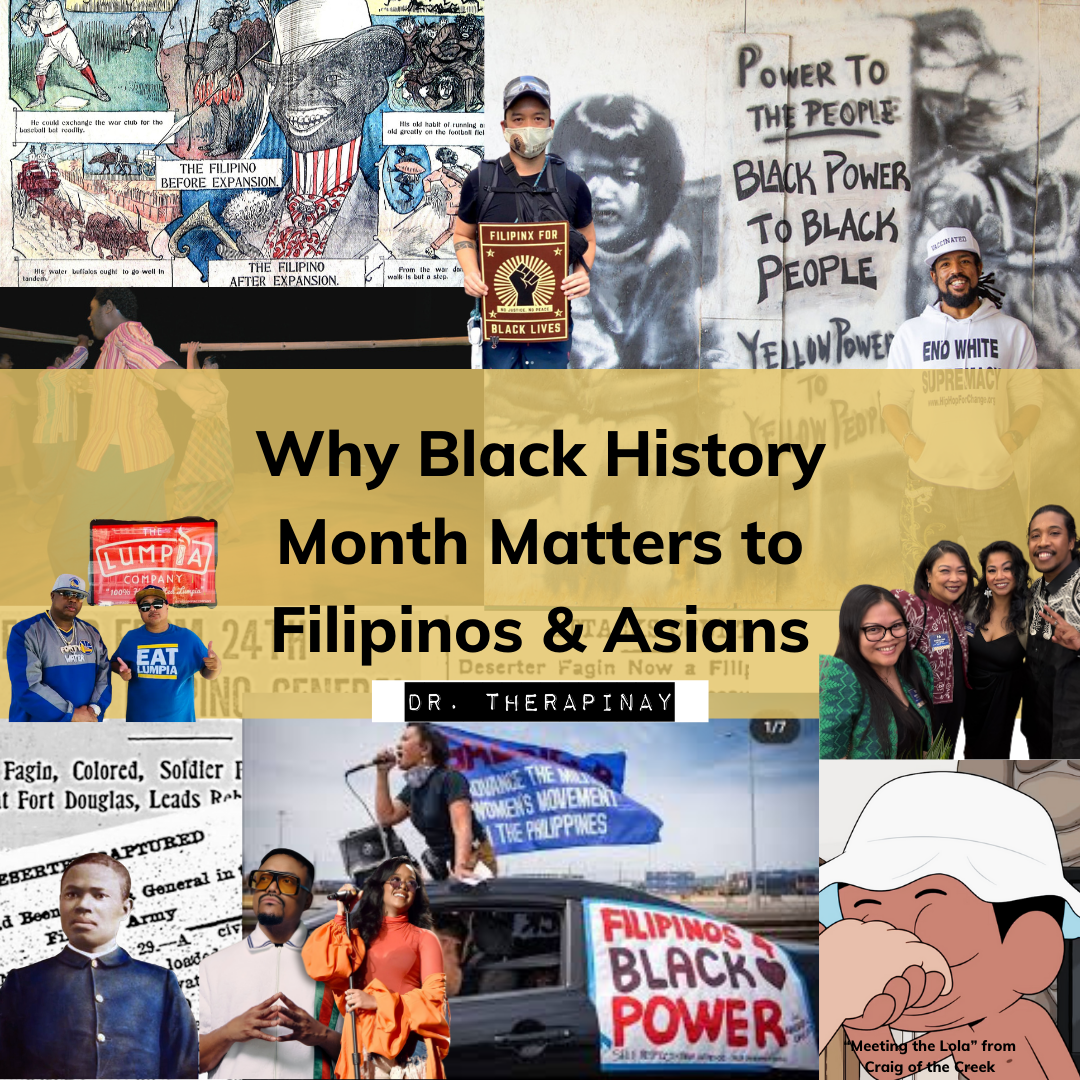
@the.drtherapinay post
Why Black History Month Matters to Filipinos & Asians
Black History Month invites us to look at history not in silos, but in connection. The Black freedom struggle, the story of immigration in the U.S., and Filipino & Asian American history are deeply intertwined through colonialism, labor, and resistance.
There are numerous reasons that Black History Month matters for Filipinos & Asian - AND, I’ll give you 3 to start...
3. Liberation Begins with De-Colonizing the Mind
While, culturaly & socially, Black culture has had a radical influence on Filipinos, colonial mentality breeds appropriation culture and behavior amongst Filipinxs. Despite 99% of Filipino Americans experiencing racism on a regular basis (Alvarez & Juang, 2010), we know that colonial mentality continues to breed and maintain deep prejudices against people of African descent (E. J. R. David, 2016).
“liberation has never been a solo project, or meant to be a historical and past symbolic event.”
2. Cultural & Social Influences
Culturaly & socially, Black culture has had a radical influence on Filipinos, especially Filipino Americans. From music to sports to food, Filipinos and Black Americans have forged (e.g., Lumpia Company co-owned by E-40 (Earl Stevens) & Alex Retodo; Rise Training Academy by De Boa and Contra Mestre Tinta Forte), and embodied (e.g., Saweetie, Apl de ap, H.E.R)
connections that is not just historical, but generationally groundbreaking and healing.hearts, shared stories, and found solidarity.
1. Black–Filipino–Asian Solidarity: History in Practice
Black-led movements for racial justice, labor rights, and housing equity open doors and shaped opportunities for all communities of color, including Filipino & Asian Americans. We must give respect, move in solidarity, and deepen our relationships.
Historically, we know of the infamous David Fagen/Fagin, an African American soldier who became a guerilla leader after leaving the U.S. military to join the Filipinos (others who did the same were executed by the U.S. Presidents when found)
Filipinos and Black Americans fought together through labor movements that intertwined with, and moved alongside the infamous Delano Grabe Strike in 1965, when Filipino farmworkers, led by Larry Itliong, initiated a massive labor protest in California.
From Vincent Chin Solidarity, to Mike Gillespie (b. 1951), a Filipino American trumpet player, and Mike Tagawa (b. 1944), a Japanese American and veteran of the Vietnam War, who joined the Black Panther Party in Seattle (Givens, 2018), Black-Filipino-Asian solidarity is historical, intentional, and essential, not just symbolic.
Solidarity & Moving Forward
From Black Americans fighting enslavement and Jim Crow, to immigrants navigating exclusion laws and racial hierarchies, to Filipinos arriving as U.S. nationals after American colonization these histories reveal how race, migration, and power have shaped one another.
We have a history of significant ways that we
fought together; and worked side-by-side in fields, shipyards, and hospitals to build coalitions, challenged oppression, and imagined more just futures together.
REMEMBER THIS as a way to continue to challenge the colonial messages that divide our communities and pit us against each other, because ultimately division fuels the oppressor/oppression
Remembering these intersections reminds us that liberation has never been a solo project, or meant to be a historical and past symbolic event.
Our histories overlap, our struggles echo, and our futures are linked. We learn from these historic markers, we teach others, and we replace a system not created for us with something else that liberates all of us.
To dismantle generational wounds, inherited remnants of colonial mentality, or simply seeking support from a therapist or healer who sees ALL of YOU, check out Therapinay.com