Part II: Build Bayanihan: Healing Through Kapwa, Collective Care, and Liberation
Build Bayanihan:
Healing Through Kapwa, Collective Care, and Liberation
Written by Dr. Therapinay
Founder, Therapinxy
Our 3-part series and guide to shifting from cliques and canceling toward community rooted in collective care
In our community spaces, whether in healing, organizing, or cultural work, we often say we want to build “community.” But sometimes, what we actually create are cliques. Other times, we nurture kapwa (that deep interpersonal connection) but without the collective structure to sustain it. Still other times, we focus on community-building systems but may lose the relational soul that binds us. So how do we build bayanihan - that ancestral Filipino value of mutual support - especially when tsismis (gossip), avoidance, betrayal wounds, and cancel culture can fracture trust?
This article is PART II of our 3-part series that offers a grounded reflection on three common ways we gather: in cliques, for community building efforts, or because of kapwa. With awareness, we can shift from harmful patterns toward healing and liberation.
What Are We Really Building?
Let’s take a closer look at “cliques”, community building, and kapwa building to better understand these three types of group dynamics through the ways they overlap, what is unique about each, where can we learn to grow, and how to transform our work towards deep collective caring liberation.
What They All Have in Common
Despite their differences, all three types of spaces are trying to meet real human needs:
Clique-building is identity and protection-based, often (not always, but frequently and commonly) shaped by fears and need for belonging through exclusivity.
Community building is systems-and purpose-based, often rooted in shared vision and vision through connection.
Kapwa-building is soul-and relationship-based, focused on interconnection, collective understanding, and sacred witnessing.
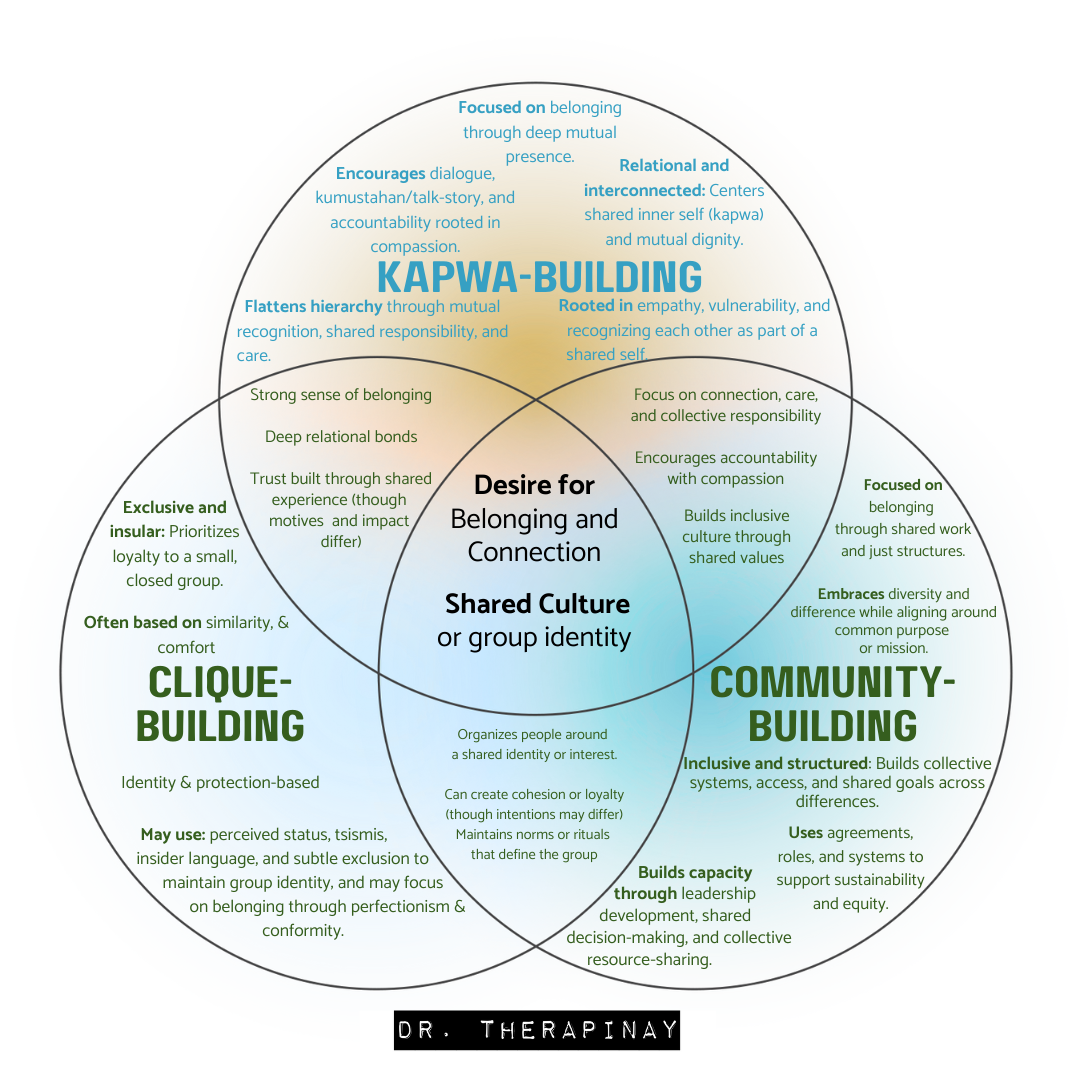
Clique-building, community building, and kapwa-building emerge in response to fulfilling the need for belonging, connection, or be part of a shared identity or culture. While kapwa and community building are more aligned with collective liberation and relational care, even clique-building can serve a protective or adaptive function in certain contexts. How each is communicated or created is distinctly different. Here’s a breakdown of when each may be “necessary” or understandable, while also naming the limits of each...

Healing Without Pathologizing & Shaming
Modern medicine and psychology further pathologizes relational wounds with diagnoses such as Personality Disorders (e.g., Narcissistic, Avoidant, Dependent, Borderline Personality Disorder (BPD), Attachment Disorders (e.g., Reactive Attachment Disorder, Disinhibited Social Engagement Disorder).
Many trauma-informed or relational theorists argue that:
Medicalizing relational wounds can obscure their social, cultural, and interpersonal origins.
Diagnostic labels may increase stigma rather than foster understanding or healing.
There’s a growing call to shift toward relational, narrative, and trauma-informed models of care that acknowledge the role of attachment, connection, and relational context in mental health
When we shame and pathologize others, it might sound like: “They are soooo crazy! like looney-bin crazy” or “I don’t trust them, they’re just so bi-polar and schizophrenic!” This language has become so commonplace that expressing any distress or negative feelings might feel scary, taboo, or embarrassing and too vulnerable. This does not overshadow the support that providing diagnoses may create in order to access resources, implement specific healing interventions, and compassionate care. What we do know is that, through colonial mentality, generational woundings, interpersonal difficulties, these diagnosis can shape our how we perceive and treat others. This simply highlights the influence on society and supporting stigma within interpersonal relationships.
Collective Care in Practices
In reimagining how we relate to one another, we are called to move beyond stigma and toward collective compassion. We reimagine a kind of bayanihan of the spirit, where healing becomes a shared responsibility. Bayanihan, a Filipino value rooted in community cooperation and mutual aid, reminds us that well-being is not an individual endeavor but a collective one. When we lift each other instead of labeling or isolating those in distress, we create momentum for unity and integrity that transcends borders and identities. This solidarity invites us to dismantle the narratives of shame and separation born from colonial and systemic oppression, and to instead build bridges of empathy, understanding, and care. In practicing this global bayanihan, we affirm that every act of compassion contributes to the integrity and wholeness of our shared humanity.
Sustainable movements and organizations can weave together kapwa and community-building, while keeping an eye on where clique dynamics are starting to form and gentle notice IF there’s a needed rebalancing or healing.
If there's trust but no structure → Strengthen community building
If there's structure but no trust → Deepen kapwa-building
If there’s loyalty but fear or exclusion → Gently transform clique dynamics
Building a culture of bayanihan means tending to our relationships like we would a shared garden by planting seeds of compassion, and watering trust every day.
When we embody bayanihan in our words and actions, we begin to rewrite the story of mental health from one of isolation to one of interconnected healing. Our collective strength lies not in uniformity but in our willingness to hold space for each other’s pain, differences, and growth. By centering solidarity, we cultivate communities that thrive on trust and shared purpose. We build communities where every person feels seen, valued, and supported in their journey toward wholeness. This movement toward global integrity is not abstract; it begins in everyday conversations, in how we choose understanding over judgment, and in how we show up for one another with presence and compassion.
What you can start doing now:
PAUSE. Practice mindful language: Speak with empathy and awareness, knowing that words can either reinforce stigma or create healing. Interrupt hurtful jokes that come at the expense of other people’s humanity
Nurture collective care: Create affirming spaces. Healing deepens when communities commit to mutual support and compassion rather than individual survival. Pause before passing on “tsismis”: Ask if it builds connection or erodes trust. Deepen reflection times, or perhaps create circles or healing spaces that model kapwa-based dialogue
Uphold global bayanihan: Let our local acts of solidarity ripple outward, inspiring international solidarity efforts towards a global culture rooted in dignity, connection, and shared humanity. Support structures that uplift community healing
Where to find Kapwa-building spaces?
At Therapinxy, we are committed to cultivating healing spaces where truth-telling, vulnerability, and collective liberation are cultivated. We learn from our mistakes, and strive to better serve our community through feedback, communication, and growing together. For instance, some community agreements we utilize in our chapter/working spaces are:
Assume Good Intentions, Stay Accountable to Impact
Practice brave honesty & move at the speed of caring trust
Honor confidentiality, consent, and taking pause
Center repair over perfection
Hold Non-Judgmental Space
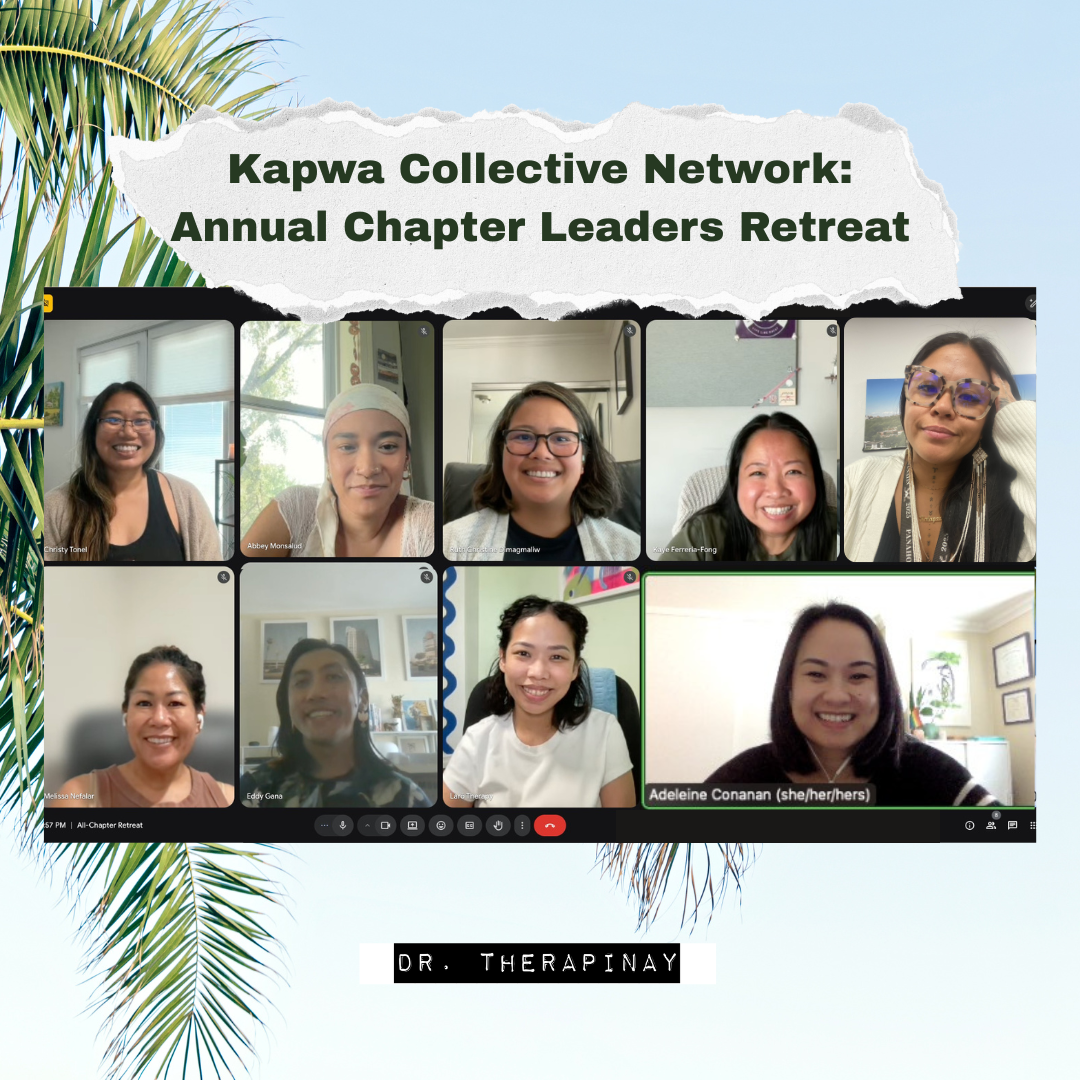
Our Kapwa Collective Network Chapters are professional networks where Filipinx therapists and wellness providers can grow their practices, while connecting back with identity, roots, and culture.
While chapters create space to support mental health & wellness providers, they may also host community engagement events that are attuned and responsive to the needs of the Filipina/x/o population. In our chapter gatherings, support circles, and retreats, we’ve seen how:
Shared story-telling heals shame and builds trust
Accountability practices reduce triangulation and gossip
Humor can be reparative, not harmful, when rooted in love
When we’re seen fully, we no longer need to hide or harm others
This is not easy work.
But it is sacred.
It asks us to unlearn the social armor we inherited and replace it with practices of courage, consent, and compassion.
⟶ Check out our Kumustahan Circles/Mixers/Kita-kits/Open Mics with our Therapinxy Chapters for our affirming and supportive spaces this 2025-2026 year!
Healing takes not only self-care, but community care. Remember, we cannot do everything on our own; it takes connection to heal as well. Finding a community who you can relate to can take time, but I invite you to take a step towards exploring groups and passions from a place of intentional healing, compassion, and collective growth. Check out different websites or pages that align with your values and interests and connect with people on that platform! Need a suggestion? Build bayanihan with us -