Part I: Building Bayanihan
Part I: What is Building Bayanihan
Written by Dr. Therapinay
Founder, Therapinxy
Our 3-Part series and guide to shifting from cliques and canceling toward community rooted in shared care
By Dr. Therapinay
Part 1: What is Bayanihan, and Why Does It Need Building?
Welcome to the first installment of our series on Building Bayanihan!
In our community spaces, whether in healing, organizing, or cultural work, we often say we want to build “community.” Most commonly, “Building Bayanihan” is known to “togetherness in common effort” (Enriquez, V.G.1992). This act of cooperation, communal unity, and mutual support is a movement of community! We see bayanihan through fundraising for disaster relief efforts, connecting into community spaces after community tragedies, activism, or organizational teamwork.
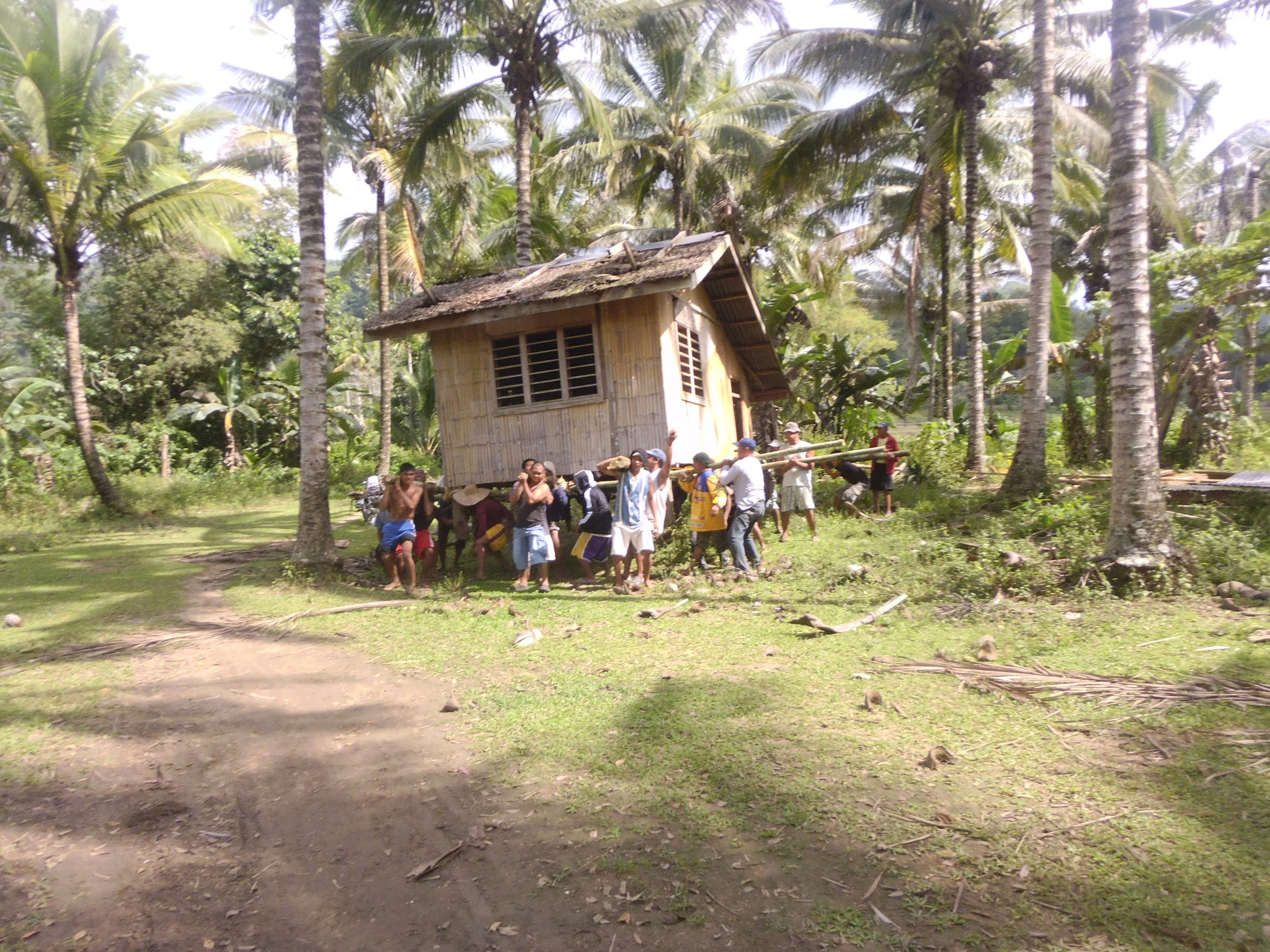
The etymological meaning is rooted in the Tagalog word bayan, or "community, town, or nation.” This emphasizes the deep psychology of our community-centric values that fuel the practice: kapwa (shared being), pakikisama (getting along with others), utang na loob (debt of gratitude), and hiya (a sense of propriety). The most iconic depiction of Bayanihan in action has been the imagery of our peoples coming together to move the large bahay kubo (nipa hut). This powerful visual captures the essence of collective strength and a willingness to share the heaviest burdens.
But Bayanihan is more than a one-time and individual-centered heroic act of labor. It is an enduring cultural philosophy that emphasizes mutual aid and shared responsibility, operating on the belief that the well-being of the individual is inseparable from the well-being of the collective.
The Foundation: Kapwa
To truly understand Bayanihan, we must understand its foundation: Kapwa.
Kapwa is a core Filipino concept that means "shared inner self" or "shared being." It’s the profound realization that my being is inextricably linked to yours. When we operate from a place of Kapwa, we recognize our shared humanity and inherent worth, dissolving the hard line between "us" and "them."
Bayanihan, then, is the action fueled by the philosophy of Kapwa. It is the commitment to show up for your shared humanity, recognizing that when one person thrives, the community truly flourishes.
Why Does Bayanihan Need "Building"?
If Bayanihan is such a deep-seated value, why title this series "Building Bayanihan"? Because in our modern, often individualistic, and hyper-critical world, the true spirit of Bayanihan is being impacted, replacing genuine connection with brittle conditions.
What does that look like? Our lush landscape of bayanihan is being uprooted, displaced, and compacted by:
Transactional Aid: When Bayanihan is reduced to a 'quid pro quo'—I help you only because I expect you to help me later. This replaces care with a contract.
Conditional Belonging: The 'compacted soil' only allows certain plants (people) to thrive. Belonging is only offered if you adhere to unspoken, rigid rules (of politics, identity, or behavior).
Burnout and Siloed Labor: The burden isn't truly shared. Oppression creates a system that uproots, divides, and romanticizes competition at the expense of relationships & one’s wellbeing. One or two people end up carrying the entire bahay kubo, which is a betrayal of the communal spirit and leads quickly to burnout.
When these forces take root, the act of community becomes a chore, an obligation, or a tool for judgment, rather than an expression of our deepest shared connection (Kapwa).
Building Bayanihan is about moving past superficial acts of community and intentionally cultivating spaces where:
Care is unconditional.
Belonging is non-negotiable.
Labor is equitably shared.
In our next part, we'll dive into the specific obstacles—the "quiet judgments" and "rigid circles"—that actively prevent us from achieving genuine Bayanihan, and how to spot them in the spaces you hold dear.
This is not easy work. But it is sacred.
It asks us to unlearn the social armor we inherited and replace it with practices of courage, consent, and compassion.
Community Reflection & Check-In
We invite you to sit with these questions, whether in your journal, with a trusted kapwa, or in quiet contemplation:
Reflection Question:
Where have you witnessed the spirit of Bayanihan thrive in your life? Where has it felt transactional or conditional?
What helps me feel safe, seen, and rooted in a space?
How can I welcome more imperfection, contradiction, and care in the spaces I help shape?
These questions aren't meant to lead to one answer — but to keep the soil turned, the roots honest, and the heart open.
Resources for Reflection & Action
bell hooks, All About Love: New Visions (2000)
Mia Mingus, The Practice of Transformative Justice (2020)
Adrienne Maree Brown, Emergent Strategy (2017)
Alok Vaid-Menon on conditional belonging and the politics of desirability
Remember, we cannot do everything on our own; it takes connection to heal as well. Finding a community who you can relate to can take time, but I invite you to take a step towards exploring groups and passions from a place of intentional healing, compassion, and collective growth.
Explore our community spaces, offerings, and therapists at:
🌐 www.therapinay.com
And, we’d love to connect with YOU! Come build bayanihan with us -