
Nonbinary Pride: A Rejection of Colonial Logic That Extends Beyond Gender
Written by AJ Johnson (they/them)
Lead, Non-Binary Chapter Copywriter
Nonbinary Pride: A Rejection of Colonial Logic That Extends Beyond Gender
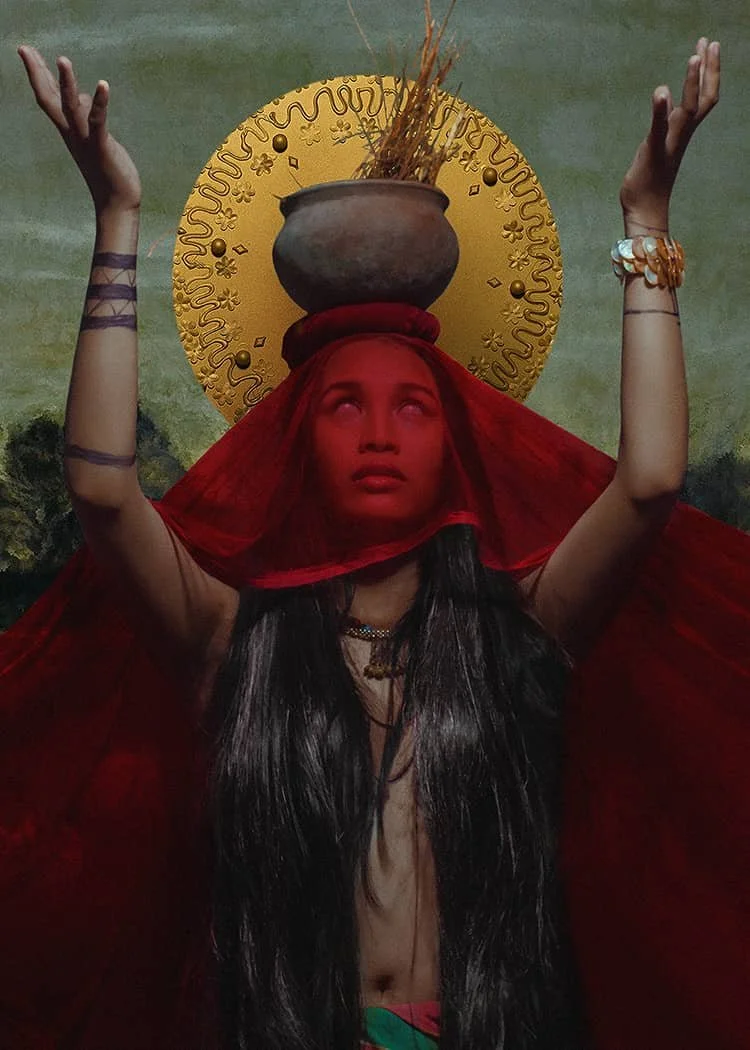
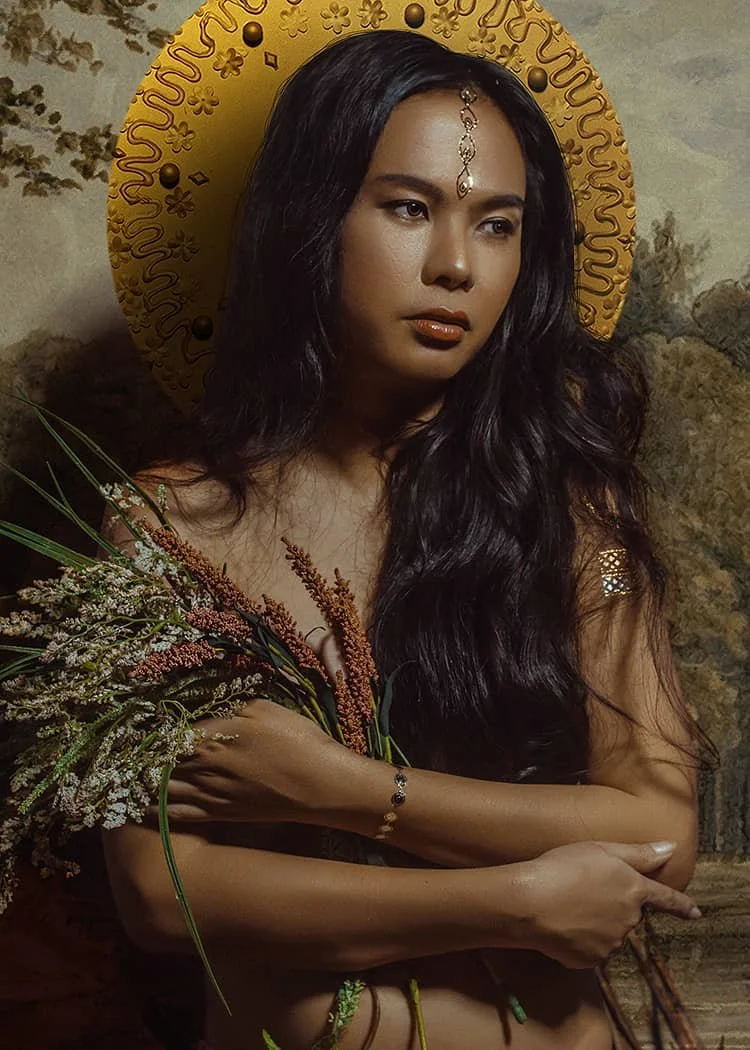
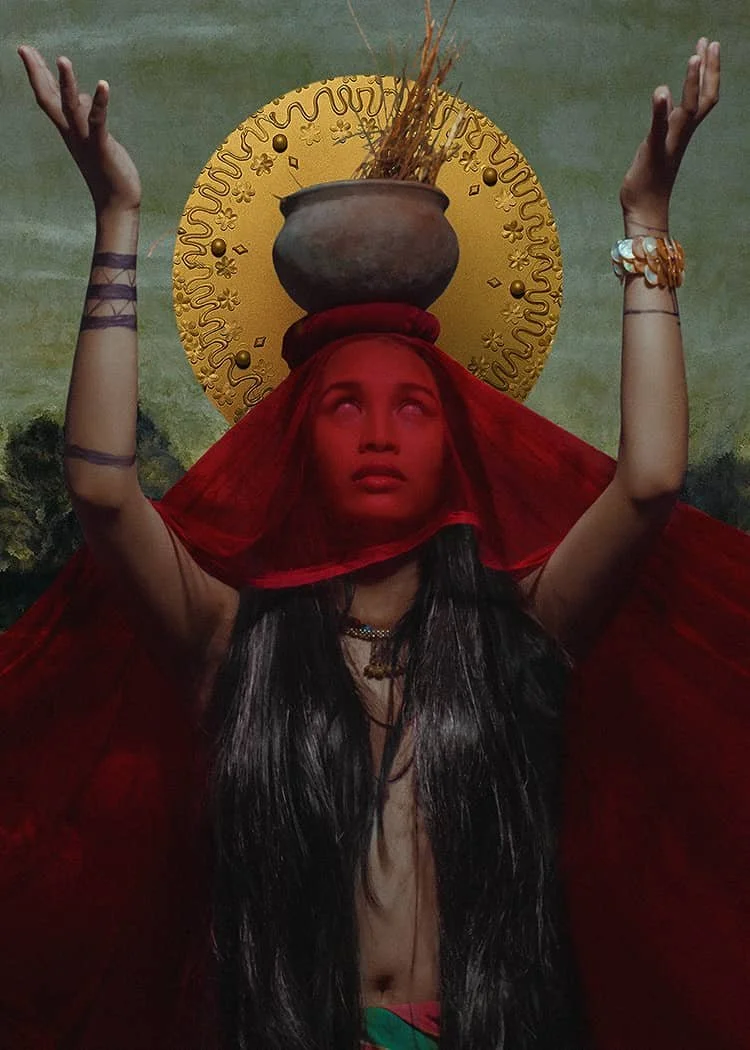
photos for their article from ‘Diwata,’ a photograph collection that was part of the Southeast Asia Queer Cultural Festival 2021. Information about the exhibit and to credit the Artists, Renz Y Botero and Natu Xantino, can be found here: https://seaqcf.net/program/diwata
Non-binary Pride is a celebration of our refusal to be contained by the prescriptive notions of gender that were enforced upon our ancestors through colonization and that continue to be imposed and policed via the violence of patriarchy and white supremacy. Our existence challenges the assumption that gender must fixed and legible, that it can be contained at all.
But this year during Pride month, I am also proposing that we see the Nonbinary identity as transcending ideas of gender to encompass a much broader rejection of colonial logic itself, particularly the way it constructs binaries in order to establish hierarchies and justify violence.
Bear with me.
In a colonial framework, binary categorization functions as a technology of control to rationalize domination. As a first act of binary violence, humans position themselves as separate from the natural world and classify it into discrete categories as a claim of authority over it, laying the groundwork for extraction and exploitation of the land and its resources. To further legitimize the stealing and the pillage of others’ lands, the people colonial empires must dehumanize those others by separating themselves from them, defining themselves as civilized, rational, and moral, while rendering Indigenous peoples as uncivilized, irrational, and immoral.
Our Pride as Nonbinary people is a challenge to this colonial worldview.
To me, our Nonbinary identity is a rejection of the colonial construct of a self within the binary “me versus you,” and instead embraces our Filipinx understanding of loób as emerging from our interconnected and interdependent relationships with each other, with the land, and with divinity. Rather than a rigidly defined separate identity that is organized around competing for scarce resources within colonial capitalism, kapwa as shared personhood acknowledges that to be a human is always to be part of a collective “us”. Nonbinary is a recognition that the other is not fully separate from me. Our wellbeing is intertwined, our suffering is shared, our liberation is bound together.
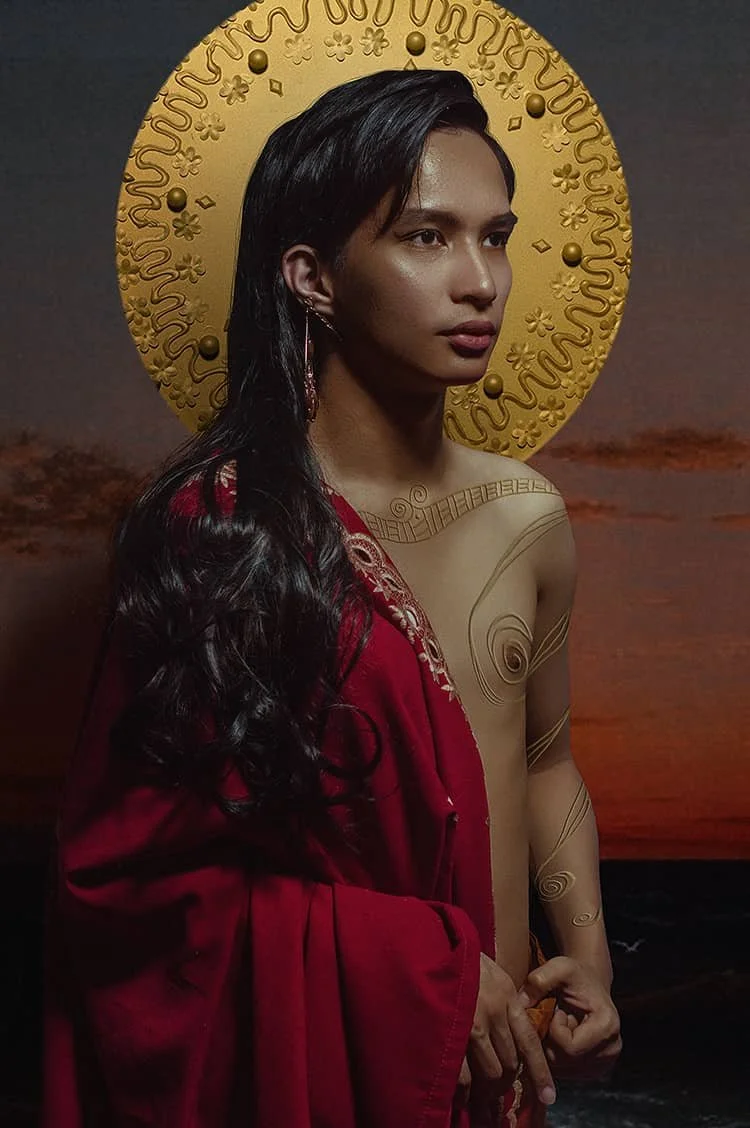
photos for their article from ‘Diwata,’ a photograph collection that was part of the Southeast Asia Queer Cultural Festival 2021. Information about the exhibit and to credit the Artists, Renz Y Botero and Natu Xantino, can be found here: https://seaqcf.net/program/diwata
To me, our Nonbinary identity is a rejection of the colonial construct of humanity within the binary “people vs. nature,” and instead embraces how kapwa invites us to remember that we are animals, embedded within a world that asks to hold us and to be held by us. Rather than land as property, and forests and rivers as commodities to profit from, the land calls us into relationship that honors all living things as worthy of respect and care. Nonbinary is a recognition we are nature. We are fluid and dynamic, part of a relational ecosystem that is always transforming.
To me, our Nonbinary identity is a rejection of the colonial construct of life within the binary “material vs. spiritual,” and instead embraces how kapwa is infused with the holy, connecting us to ancestors, anito, diwata, and all the unseen in the more-than-human world. Rather than the divine being confined to an external, transcendental realm, it is imminent and embedded in our traditions and rituals is a devotion to reciprocity and balance. Nonbinary is a recognition that we are sacred. We are the spiritual embodied, inseparable from life that moves through us and around us.
Nonbinary Pride is not only about re-indigenizing gender, but also about healing the colonial mindset that taught us we are separate from each other, the land, and spirit. This is so incredibly important to healing because this fragmentation didn’t just impact our minds. When we came to understand ourselves from our communities, our ecologies, our ancestors, and our divinity, we were severed from our sense of wholeness. The manifestation of this is intergenerational wounding across the diaspora.
Nonbinary Pride is a practice of decolonial repair. It is a rejection of these binaries that have enacted so much harm and violence, and it is a remembering of more integrated ways of understanding ourselves within a relational network of care, belonging and resilience. Pride has always been less about visibility and more about the struggle against dehumanizing systems and toward collective liberation.
Happy Pride Month!

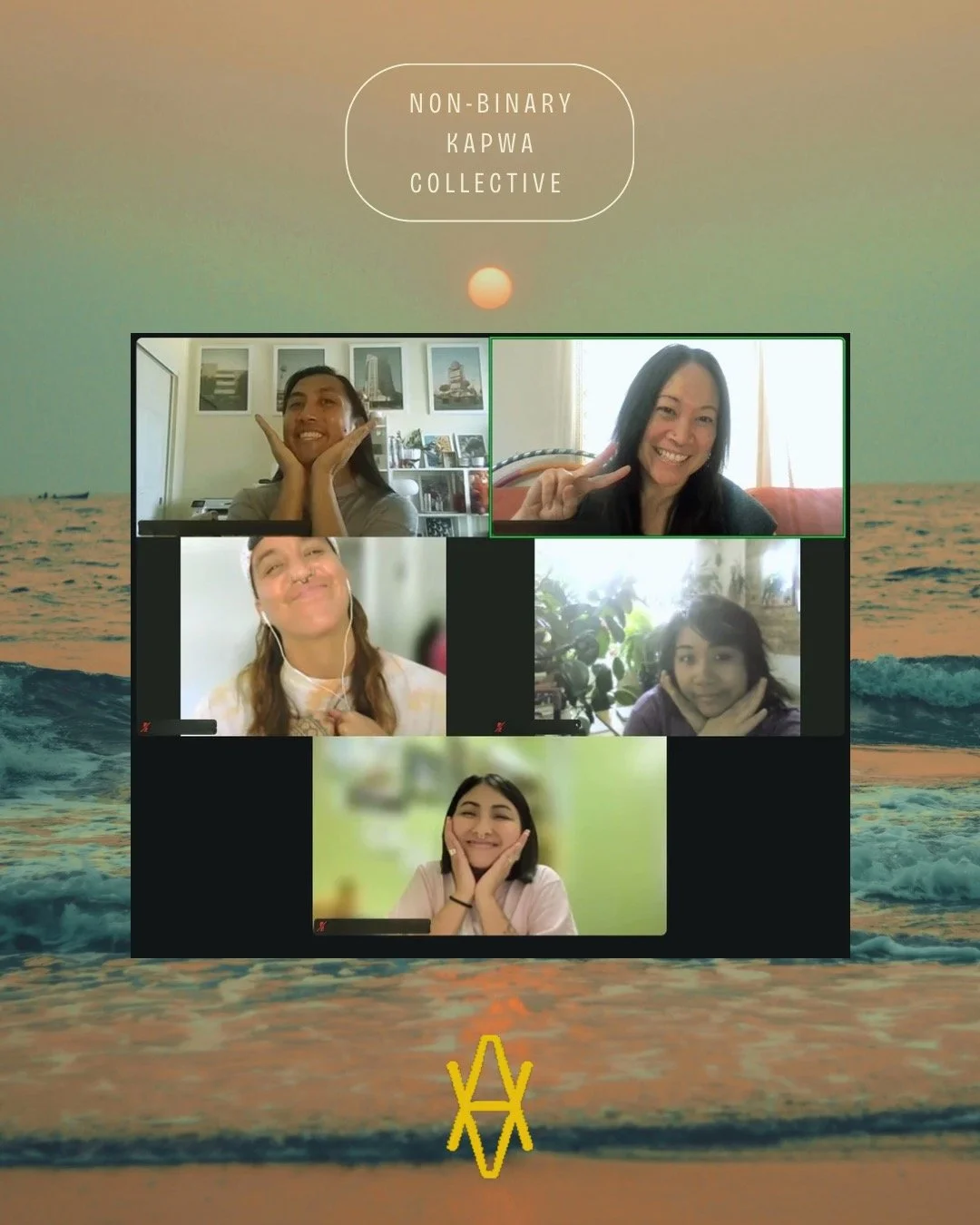
PLEASE JOIN US!
We are so excited to share with you the ways that we have been building bayanihan within the Therapinxy Non-Binary Kapwa Collective as a home for queer and non-binary therapists, wellness providers, and people of Filipinx descent who are reclaiming wholeness, joy, and collective power across the spectrum of gender, sexuality, and cultural intersectionalities.
We are excited for our upcoming online and in-person events in June for Pride Month to celebrate the history of Filipinx nonbinary and genderfluid history and to affirm our shared human rights to safety, acceptance, and belonging!
Please reach out if you are are interested in becoming a potential member of the Therapinxy Non-Binary Kapwa Collective Chapter!