A Filipinx Guide to Suicide Prevention & Collective Care
Written by: Dr. T (Founder)
A Filipinx Guide to Suicide Prevention & Collective Care
At Therapinxy, we believe that mental health is not just an individual journey, it is a collective one. Grounded in the spirit of Kapwa (our shared inner self), bayanihan (community care), and liberation, this toolkit is designed to equip our global Filipinx family with the tools to spot the signs of distress, speak openly about suicide, and safely connect loved ones to culturally affirming care.
⚠️ If you or someone you know is in immediate danger, please call or text 988 (in the United States) or skip to the Global Crisis Resources section at the bottom of this page for free, confidential, 24/7 support. If you think you have a medical emergency, call your doctor or 911 immediately. This website is not designed to facilitate medical emergencies or provide medical advice.
Understanding Suicide in Our Community
In many Filipinx households, mental health struggles are often met with Hiya (shame) or dismissed as a lack of faith or resilience ("Tinitiis lang"). This silence isolates those who are hurting.
To break this cycle, we must look out for one another. Distress doesn't always look like crying. In our culture, it often manifests subtly; while, simultaneously being normalized and dismissed pervasively.
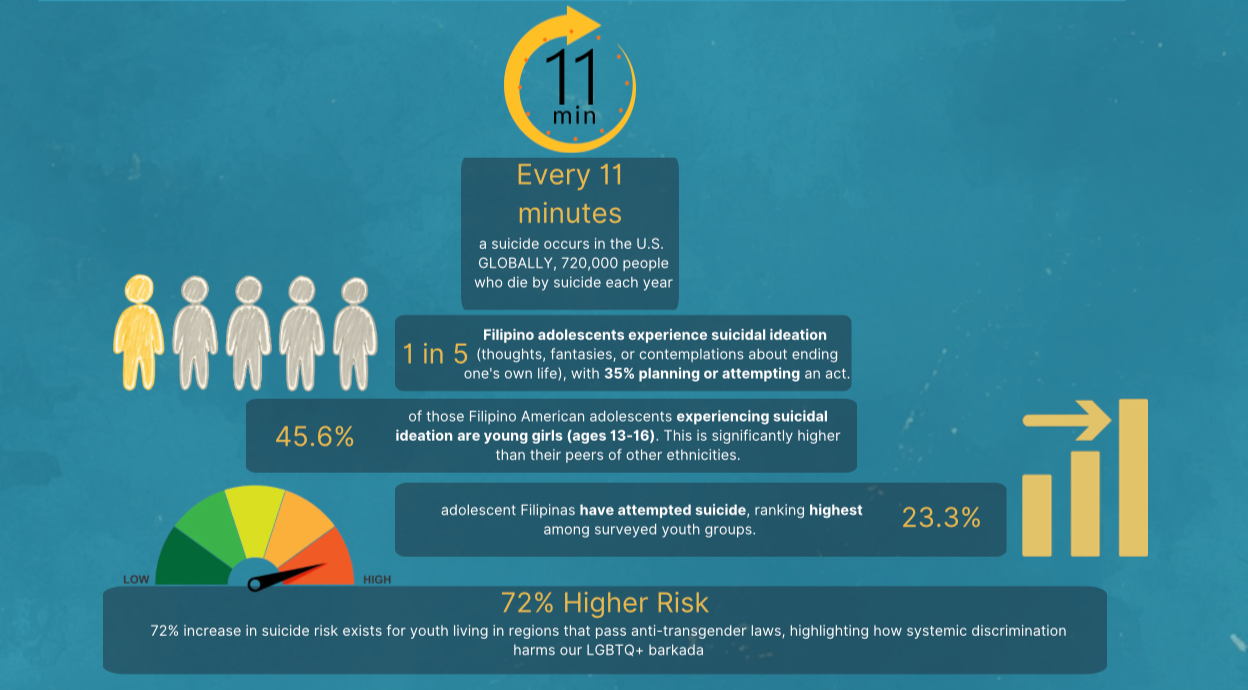
To address the needs of our community, we must face the realities of our collective pain. Every person deserves access to mental health resources. Understanding the true scope of this crisis helps us build safer, more supportive environments. The numbers within our Filipino community highlight an urgent need for open conversation and culturally tailored support, particularly for our youth:
Statistics to Know
Every person deserves access to mental health resources. Understanding the true scope of this crisis helps us build safer, more supportive environments:
Source: Therapinxy Suicide Prevention Toolkit (2026)
⚠️Note on Root Causes: Suicide is NOT the result of a single cause.
Known risk factors include: a history of mental illness, trauma, access to lethal means like firearms, financial stress, discrimination, and others. We must acknowledge the complexity of these factors when discussing this topic with our community.
Warning Signs to Watch For:
Behavioral Shifts: Giving away cherished family heirlooms, pulling away from family gatherings or barkada (friend group) hangouts, or putting affairs in order.
Verbal Clues: Making statements like "Sana hindi na lang ako nagising" (I wish I didn't wake up), "Pabigat lang ako" (I'm just a burden), or "They're better off without me."
Physical or Emotional Fatigue: Expressing profound exhaustion, feeling trapped by generational expectations, or experiencing sudden, drastic mood changes.
Increased Substance Use: Relying heavily on alcohol or substances to cope with unspoken pain.
Myth-Busting: Reframing the Conversation
Shifting our cultural narrative means replacing old assumptions with life-saving facts. Here is the truth behind common misconceptions:
❌The Myth: Suicide happens out of nowhere without warning.
The Fact: There are almost always warning signs for suicide. Recognizing behavioral, verbal, or emotional shifts can save a life.
❌The Myth: If someone is determined to end their life, nothing can stop them.
The Fact: Suicide is preventable, and providing access to resources, community care, and professional help DOES make a structural difference.
❌The Myth: Asking someone about suicide will plant the idea in their head.
The Fact:Talking about suicide does not increase risk. It reduces isolation and creates a safe outlet. However, sharing graphic details of methods or locations does increase risk and should be strictly avoided.
How to Start the Conversation
Asking someone if they are thinking about suicide will NOT put the idea in their head. Instead, it offers a lifeline of relief. When reaching out, approach with deep empathy, leaving judgment at the door. Culturally, starting the conversation is an act of empathy, an act of pakikipagkapwa (shared humanity and deep interconnection), and an act of simultaneous self-collective caring. It may even sound like "Ang laban mo ay laban ko na rin" (Your fight is my fight as well), or being in a community space that looks out for each other, like “Isang Bagsak” (the rallying cry that originated in the Philippines, and was coupled with the Unity Clap that was prevailing during the 1965 Delano Grape Strikes,and in which both combined was revitalized by the Filipino grassroots organizations in the 1990s, such as Filipino Advocates for Justice (formerly, Filipinos for Affirmative Action), Anak Bayan East Bay, and many activists-educators like Artnelson Concordia. The phrase means: one down, one fall; or, one down or we all fall and rise together)
❌ What to Avoid Saying:
"Don't think that way, think of how much your family sacrifices for you." (This triggers heavy immigrant guilt and hiya).
"You just need to pray more or have more faith." (This minimizes clinical or deep psychological distress).
"You’re just being dramatic / nag-iinarte ka lang." (This invalidates their real pain).
What to Say Instead (Scripts for Connection):
To a friend/Barkada:"I've noticed you've been really quiet lately and skipping our hangouts. I care about you deeply. Are things getting so heavy that you're having thoughts of suicide?"
To a family member:"I see how much pressure you've been under trying to take care of everyone. You don't have to carry this alone. I am here with you. Have you thought about ending your life?"
Validating their pain:"Thank you for trusting me with this. It takes so much courage to speak out. We are going to figure this out together."
Step-by-Step Action Plan: How to Help
If a loved one confesses they are having suicidal thoughts, follow these core steps to keep them safe:
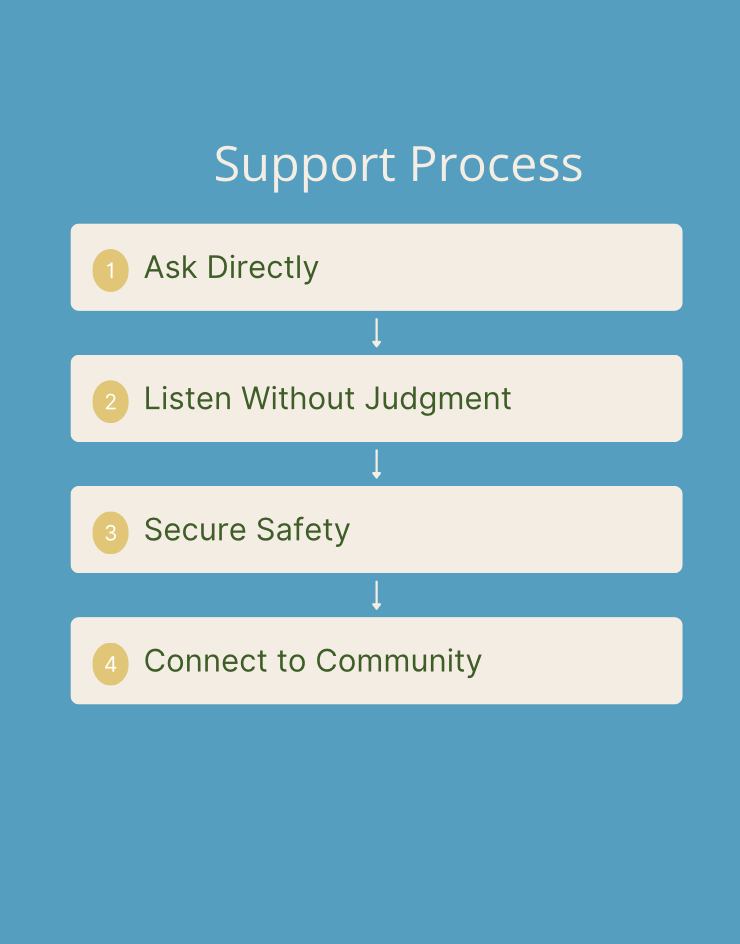
Ask Directly: Ensure you ask the question clearly: "Are you thinking about suicide?"
Keep Them Safe: If they say yes, ask if they have a plan or access to immediate means. If they have an immediate plan, do not leave them alone.
Be Consistently Present: Listen to their pain without immediately trying to "fix" it or lecture them. Let them know their life matters to you.
Connect to Culturally Responsive Care: Gently guide them toward professionals who understand the nuances of the Filipinx/Filipina/Filipino diaspora.
⚠️ Action Item: Help them connect to a suicide and crisis lifeline, or navigate the Therapinay Directory to find a psychiatrist or clinical therapist, ancestral healer, or wellness provider who understands Filipino identity & culture, intergenerational trauma, and the immigrant experience.
Your Next Steps: Healing in Community
You do not have to carry the weight of the world, your family, or your hidden struggles alone. Healing is an active, communal practice, an expression of Bayanihan that reminds us we are safer and stronger together.
If you are hurting right now, please reach out to the immediate, confidential lifelines listed below, or text 988.
If you are looking to build a long-term support system, we invite you to explore the Therapinay Directory to connect with mental health providers,wellness practitioners, and healers who truly understand the nuances of our culture, our diaspora, and our shared journey.
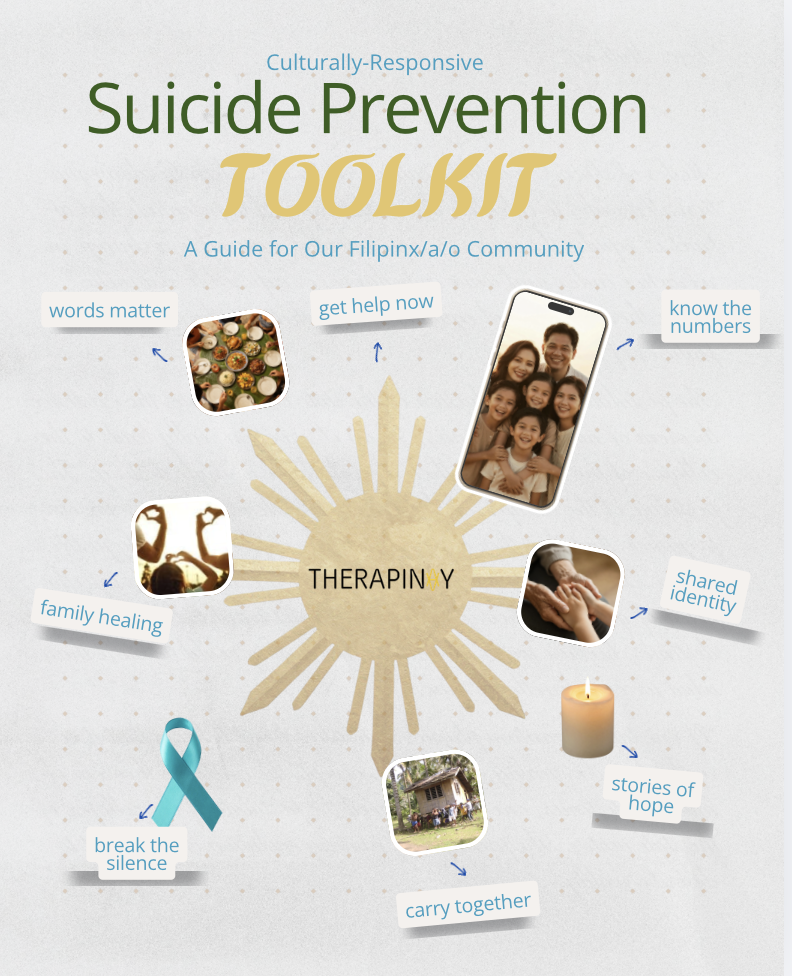
If you’d like our Filipino Suicide Prevention Toolkit, please access it HERE!
Let’s look out for one another, break the silence, and choose collective care today.